
Paris 10k 2025: I’m Coming Back!
I’m beyond excited to announce that I’ll be running the Paris 10k again on June 8th, 2025! This race holds such a special place in my heart—the atmosphere, the energy, and the incredible city backdrop made it an unforgettable experience last time. So, the moment I had the chance to do it again, I didn’t hesitate!
After everything I’ve been through with my injury and recovery, this race feels even more significant. It’s a chance to return stronger, to run without pain, and to truly enjoy every moment of it. Paris brings a unique kind of magic on race day, and I can’t wait to soak up the vibes, push my pace, and see how far I’ve come since my last 10k there.
Between now and June, my focus is on building strength, staying injury-free, and preparing to give it my all. I know this race is going to be something special, and I’m counting down the days until I’m back running through the beautiful streets of Paris. Let’s do this! 🏅✨


Evelyn McHale: The Most Beautiful Suicide and Its Impact on Pop Culture
On May 1, 1947, a young woman named Evelyn McHale leapt to her death from the 86th floor of the Empire State Building. Moments later, photography student Robert Wiles captured an eerily serene image of her body resting on the crumpled roof of a limousine.
The photo, later dubbed “The Most Beautiful Suicide,” became one of the most haunting and iconic images of the 20th century—a symbol of tragedy, beauty, and the eerie stillness of death.
But what many don’t realise is how Evelyn McHale’s suicide has influenced pop culture, art, and even music decades later.
The Power of the Image
The photograph of McHale’s lifeless body is unlike any other. Instead of appearing mangled or gruesome, she looks peaceful, as if she is merely sleeping. Her crossed ankles, white-gloved hands, and gently draped skirt make the scene disturbingly elegant.
This contradiction—between the violence of her death and the beauty of the image—is what has made it so compelling to artists, musicians, and filmmakers.
How Evelyn McHale Inspired Pop Culture
🎨 Art & Photography
The image has been recreated, reinterpreted, and referenced in countless ways over the years:
- Andy Warhol’s “Suicide (Fallen Body)” (1962) – Warhol, known for his fascination with death and celebrity, used the McHale photo in one of his famous silkscreen pieces, making her a part of pop art history.
- Surrealist and modern artists continue to be inspired by the juxtaposition of her elegant pose and the destruction around her.
🎬 Film & Media
The image has influenced cinematography and storytelling, particularly in how suicide and tragedy are portrayed visually.
- The film “The Eye of the Beholder” (1999) includes a direct recreation of McHale’s suicide.
- In TV shows and psychological thrillers, the concept of tragic beauty and self-destruction has been a recurring theme, often echoing McHale’s aesthetic.
🎵 Music & Album Covers
- David Bowie’s “Jump They Say” (1993) music video was heavily inspired by McHale’s story, exploring themes of mental illness and societal pressures.
- The Smiths, Joy Division, and other post-punk bands have drawn from the eerie beauty of her death in their melancholic aesthetics and album art.
🖋️ Literature & Poetry
- Writers and poets have used McHale’s suicide as a metaphor for the fragility of life, depression, and the illusion of glamour in death.
- The idea of “a beautiful exit” has been explored in numerous works, romanticising self-destruction while critiquing society’s obsession with it.
The Dark Side: The Romanticisation of Suicide
One of the biggest controversies surrounding the image of Evelyn McHale is how it has been romanticised.
- The media often glorifies tragic figures, especially women who die young and beautiful.
- The “tragic beauty” trope has been harmful, making self-destruction seem poetic rather than tragic.
- McHale’s photo has unintentionally contributed to this, becoming an eerie symbol of a hauntingly graceful death.
However, it also serves as a reminder of the importance of mental health awareness. Behind the striking image was a real person—a 23-year-old woman struggling with depression.
Final Thoughts: A Lasting Legacy
Evelyn McHale didn’t live to see the impact of her final moment, but her image has become a permanent part of pop culture. Whether as a tragic icon or a cautionary tale, her story continues to be referenced in art, music, literature, and discussions around mental health.
The question remains: Are we honouring her memory, or are we continuing to glamorise tragedy?

St David’s Day 5k: My First Race Back!
Last weekend, I finally made my return to racing at the St David’s Day 5k in Bute Park, Cardiff—and what a way to kick off my comeback! After weeks of injury recovery and time away from running, I wasn’t sure how my body would handle being back on the start line. But with my partner and coach, Ky, by my side, I felt ready to take on the challenge.
The race went better than I expected! The weather was perfect—crisp but sunny, making for ideal running conditions. I kept my pace steady, focusing on how my body felt rather than chasing a time. Surprisingly, everything held up well, and I crossed the finish line feeling strong and, more importantly, pain-free!
This race wasn’t about speed or setting records—it was about proving to myself that I’m back. Running alongside Ky made it even more special, and having that support reminded me how much I’ve missed being part of race day energy.
It’s safe to say that I’m officially on the road to recovery, and this 5k has given me the confidence boost I needed. I know I still have work to do before tackling longer distances again, but for now, I’m celebrating this small but meaningful victory. One step at a time—I’m back! 🏃♀️💪✨


"Long Live the King": Trump’s Propaganda Machine and the Future of America
“Long Live the King”: Trump’s Propaganda Machine and the Future of America
The White House recently posted an image of Donald Trump with the caption “Long live the king”, sparking immediate backlash and conspiracy theories about the state of American democracy.
Was this just another case of online trolling, or is it a calculated propaganda move to normalise the idea of Trump as something beyond a president—a monarch, a ruler, a king?
And more importantly—why does this keep happening?
Trump’s Obsession with Power
This isn’t the first time Trump has referred to himself in monarchical terms.
- In 2019, he retweeted an image of himself as a king, with his face imposed on the Game of Thrones “Sanctions Are Coming” poster.
- In 2020, he joked about serving more than two terms, despite presidential term limits.
- His supporters have called him the “chosen one”, a messiah-like figure destined to save America.
This latest “Long live the king” post is just another step in the slow creep of authoritarian-style propaganda.
Propaganda or “Just a Joke”?
The White House quickly deleted the post after the backlash, but by then, the damage had already been done.
The thing about propaganda is—it doesn’t have to be believable. It just has to be loud.
- The more outrageous something is, the more people talk about it.
- The more people defend or criticise it, the more it cements the idea into public consciousness.
- Even if it’s dismissed as a joke, it still works as a psychological tool to normalise the idea of Trump as a ruler rather than an elected leader.
It’s a classic authoritarian move: say something shocking, backtrack, and let the idea take root anyway.
The Future of American Propaganda
The US has long been seen as the land of free speech and democracy, but this kind of political messaging raises concerns about whether America is moving towards a state-controlled narrative—something seen in countries like Russia, North Korea, and China.
- The Great Distraction – The more outrageous headlines there are, the less focus there is on real political issues.
- Cult of Personality – Framing Trump as a “king” creates a leader-worship dynamic, where laws and democracy become secondary to the individual in power.
- Algorithm Manipulation – The post was deleted, but the debate continues across social media, spreading further than if it had simply been left up.
In Russia, Putin’s face is everywhere—on posters, T-shirts, even religious paintings. In North Korea, Kim Jong-un is literally seen as a god. Is America now heading in the same direction?
Is This Just Feeding the Fire?
One of the most dangerous aspects of modern propaganda is that it thrives on controversy. The more people talk about it, dissect it, and react to it, the more power it holds.
- The post was deleted—but it had already done its job.
- People who didn’t see it firsthand are now reading about it everywhere.
- Trump’s base, instead of being outraged, is more convinced than ever that he is “their king.”
Every time a political stunt like this happens, the bigger question isn’t just why—but what is it distracting from?
Final Thoughts: America’s Political Future
Is America shifting away from democracy into something else?
The “Long Live the King” post is just another piece of the puzzle in a larger strategy of media manipulation, cult-like leadership, and growing political polarisation.
The real question is—is thais the America people actually want?

Elon Musk, TIME Magazine, and the American Presidency: Is the US Heading for Oligarchy?
Elon Musk, TIME Magazine, and the American Presidency: Is the US Heading for Oligarchy?
Elon Musk—billionaire, tech mogul, and self-proclaimed defender of free speech—recently graced the cover of TIME Magazine, posing behind the American Presidential desk. The image instantly went viral, sparking debates about power, influence, and the shifting nature of American democracy.
And, of course, Donald Trump wasn’t happy about it.
But beyond the media spectacle, this cover raises deeper questions:
- Is the US shifting towards an oligarchy, where billionaires run the show?
- How much control does Musk have over public discourse and politics?
- Are we witnessing the rise of “Russia 2.0″—a new form of controlled democracy with tech moguls at the top?
Let’s break it down.
Elon Musk: A Billionaire in the Political Spotlight
Musk is no stranger to controversy. From his Twitter/X takeover to his public feuds with politicians, he has positioned himself as one of the most influential figures in modern America.
But this TIME Magazine cover wasn’t just a photoshoot—it was a statement.
By sitting at the Presidential Resolute Desk, Musk visually aligned himself with the ultimate seat of power in America. Whether intentional or not, the image suggests that Musk is more than just a businessman—he’s a power player in the political landscape.
And that’s exactly what Trump had an issue with.
Trump’s Reaction: A Battle of Egos?
Donald Trump, known for his obsession with media coverage, reportedly wasn’t thrilled about Musk’s TIME Magazine cover.
Trump has long positioned himself as the ultimate anti-establishment billionaire, but Musk’s growing influence challenges that narrative.
While Musk has supported some right-wing policies, he’s also clashed with Trump on various political and business fronts.
Trump has accused Musk of being disloyal, especially after Musk distanced himself from Trump’s 2024 campaign.
The irony? Trump himself has benefited from the billionaire-class system that Musk is now leveraging.
But this is bigger than just Musk vs. Trump—it’s about the bigger shift in American power dynamics.
Is America Turning Into an Oligarchy?
Oligarchy is defined as a system where a small, wealthy elite controls the country. While America prides itself on democracy, Musk’s influence highlights how billionaires now hold unprecedented power in politics, media, and public discourse.
Social Media Domination – Musk owns X (formerly Twitter), a platform that shapes public opinion, controls algorithms, and decides what narratives get amplified.
Government Influence – Through SpaceX, Starlink, and Tesla, Musk has deep ties to US military contracts, space exploration, and national security interests.
AI & Technology Monopoly – Musk’s investments in AI, robotics, and neural interfaces could make him one of the most powerful individuals in history.
Sound familiar? Russia’s oligarchs have built a similar system, where a handful of ultra-wealthy individuals control the country’s resources, businesses, and political decisions.
So, is America heading down the same road?
Is This “Russia 2.0”? The Merging of Business and Government
Russia operates under a state-controlled capitalism model, where billionaires (oligarchs) maintain their wealth as long as they align with the government.
Now, let’s look at the US:
Tech billionaires (Musk, Zuckerberg, Bezos, Gates) hold as much power as governments.
Media is increasingly controlled by private billionaires, shaping public perception.
Government contracts are handed to corporations that fund political campaigns.
While America hasn’t fully crossed into oligarchy, the TIME Magazine cover of Musk at the Presidential desk symbolises the growing blur between business and government.
And once that line disappears? That’s when democracy truly dies.
Final Thoughts: A Warning Sign for the Future?
Elon Musk’s TIME Magazine moment wasn’t just a flex—it was a glimpse into the future of American power.
With billionaires shaping policy, controlling social media, and funding political campaigns, America is looking less like a democracy and more like an oligarchy every day.
The real question is: How much power will Americans allow tech moguls to have before it’s too late?

Deepseek vs ChatGPT: The Battle for AI Supremacy
Deepseek vs ChatGPT: The Battle for AI Supremacy
For years, ChatGPT has been the undisputed king of AI chatbots, powering everything from customer service to creative writing. But now, a new challenger has entered the ring—Deepseek, China’s answer to OpenAI’s dominance.
As AI technology rapidly evolves, the competition between Deepseek and ChatGPT is shaping up to be one of the biggest rivalries in tech history. But which one is better? And what does this mean for the future of AI and global geopolitics?
Let’s break it down.
What is Deepseek?
Deepseek is a large language model (LLM) developed in China, designed to rival OpenAI’s ChatGPT. While China has produced AI models before, Deepseek is getting global attention for its impressive capabilities and the fact that it could challenge Western AI dominance.
Some key features of Deepseek:
Advanced Natural Language Processing (NLP) – Comparable to, or even better than, ChatGPT in some tests.
Stronger Chinese-language understanding – Making it a powerful tool for the Asian market.
Lower costs – AI is expensive to run, but Deepseek is reportedly more efficient.
Government-backed AI strategy – Unlike OpenAI, which operates as a private entity, Deepseek is part of China’s push for global AI leadership.
Deepseek vs ChatGPT: Key Comparisons
1. Accuracy & Intelligence
ChatGPT has been trained on massive amounts of data from Western sources, making it highly accurate in English-language responses. Deepseek, on the other hand, has been trained with a stronger focus on Chinese and Asian languages, making it more useful in those markets.
ChatGPT Wins in: Western-language accuracy, broader knowledge base.
Deepseek Wins in: Chinese-language processing, efficiency.
2. Availability & Accessibility
ChatGPT is widely available in most countries, especially in the U.S. and Europe. However, OpenAI’s services are restricted in China. Deepseek, meanwhile, is designed for China and Asia, but may face limitations in the West due to government restrictions.
ChatGPT Wins in: Global availability.
Deepseek Wins in: Accessibility in China and Asia.
3. Cost & Efficiency
Running AI models is expensive, and OpenAI has been criticised for high pricing. Deepseek, reportedly, is more cost-effective—making it a cheaper alternative for businesses.
Deepseek Wins in: Affordability and efficiency.
4. Ethical & Political Considerations
ChatGPT is subject to Western regulations and ethical concerns, including censorship and content moderation policies. Deepseek is backed by China’s government, which raises concerns about state control and propaganda.
ChatGPT Wins in: Transparency and ethical AI development.
Deepseek Wins in: Alignment with China’s AI strategy, meaning stronger government backing.
What This Means for the Future of AI
The rivalry between Deepseek and ChatGPT isn’t just about technology—it’s also about global power. The U.S. and China are locked in an AI arms race, and AI models like these are at the centre of the battle.
Here’s what could happen next:
A split AI world – Western countries might use ChatGPT, while China and its allies prefer Deepseek.
Market disruption – If Deepseek is cheaper and better, businesses may switch from OpenAI.
Big tech investments – Microsoft, Google, and Meta will double down on AI development to stay ahead.
More government regulations – The U.S. may restrict access to Chinese AI, just like it did with Huawei and TikTok.
Final Verdict: Which One is Better?
If you’re in the West and need a powerful AI assistant for English and global knowledge, ChatGPT is still the best choice.
If you’re in China or Asia, Deepseek could be the future, with better localised AI and government support.
Ultimately, this battle is only just beginning—and the AI landscape is set to change faster than ever before.
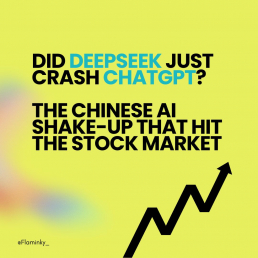
Did Deepseek Just Crash ChatGPT? The Chinese AI Shake-Up That Hit the Stock Market
Did Deepseek Just Crash ChatGPT? The Chinese AI Shake-Up That Hit the Stock Market
The world of artificial intelligence has been dominated by OpenAI’s ChatGPT for the last few years, but things just took a dramatic turn. The release of Deepseek, a powerful new Chinese AI model, has sent shockwaves through the AI industry, even causing a dip in the stock market for companies heavily invested in OpenAI and Western AI firms.
Is this the beginning of a new AI power shift? Could China’s Deepseek dethrone ChatGPT as the leading AI model? And what does this mean for investors, tech companies, and global AI dominance?
Let’s break it down.
What Is Deepseek & Why Is It a Threat to ChatGPT?
Deepseek is China’s latest large language model (LLM), developed to compete directly with ChatGPT. While Chinese tech giants like Baidu (Ernie Bot) and Alibaba (Tongyi Qianwen) have been working on AI, Deepseek has gained serious attention for several key reasons:
Comparable or superior performance – Early reports suggest Deepseek’s capabilities rival or even surpass ChatGPT in some areas, including Chinese-language comprehension, real-time reasoning, and cost-efficiency.
China’s AI funding power – The Chinese government and tech firms have poured billions into AI development, allowing them to rapidly catch up with Western AI models.
A shift in AI leadership? – Many experts believe China could surpass the U.S. in AI development within the next few years, and Deepseek might be the first major step in that direction.
With Deepseek’s launch, Western AI dominance is being challenged for the first time, and the markets have taken notice.
How Did the Stock Market React?
The impact of Deepseek’s release wasn’t just theoretical—it hit the stock market hard. Major tech stocks that have been riding the AI wave saw sudden dips:
Microsoft (MSFT) – Down after concerns that its $10B+ investment in OpenAI could be threatened by Chinese competitors.
Nvidia (NVDA) – Took a hit due to potential reduced demand for AI chips from Western firms, as China develops its own AI chips to power Deepseek.
OpenAI-affiliated companies – Startups and enterprises building on OpenAI’s tech saw investor anxiety over whether Deepseek’s AI models would undercut their market share.
Big Tech in general – Google, Meta, and Amazon all felt the pressure, as investors re-evaluated Western AI dominance.
This wasn’t a full-blown crash, but it was a clear signal that AI competition is heating up—and the markets are now taking China’s AI ambitions very seriously.
What Does This Mean for the Future of AI?
1. The AI Arms Race Just Got Real
For the last few years, OpenAI, Microsoft, and Google have been leading the AI revolution. But Deepseek’s release proves that China is not just catching up—they’re ready to compete head-on.
This could mean:
Faster AI advancements as both the U.S. and China push to outdo each other.
Lower AI costs, as competition forces companies to offer better models at cheaper rates.
More innovation, as startups and enterprises gain access to alternative AI models beyond OpenAI and Google.
2. Could ChatGPT Lose Its Crown?
ChatGPT has been the undisputed king of AI chatbots, but Deepseek’s entry raises questions:
Will OpenAI be able to maintain its dominance?
Could businesses switch to Deepseek if it’s cheaper and better?
Will Microsoft & OpenAI respond with even stronger AI models?
While ChatGPT still has a massive lead in brand recognition and adoption, Deepseek could chip away at its market share, especially in Asia.
3. Geopolitics Will Shape the Future of AI
AI isn’t just about technology—it’s about global power. The U.S. has been trying to limit China’s AI growth through sanctions and restrictions on AI chips, but Deepseek shows that China isn’t slowing down.
We could see:
More AI regulation as governments try to control AI’s influence.
Tech cold war intensifies, with the U.S. and China competing for AI dominance.
New AI alliances, with different regions aligning with either Western AI (OpenAI, Google) or Chinese AI (Deepseek, Baidu, Alibaba).
Final Thoughts: The Beginning of a Global AI Battle?
Deepseek’s launch isn’t just another AI release—it’s a sign that China is ready to challenge OpenAI, Microsoft, and the West in the AI race. With stock market fluctuations, investor panic, and rising competition, this could be the beginning of a global AI showdown.
The question is: Can ChatGPT stay on top, or is Deepseek about to change the game?

Is American Media Being Censored in Europe? Are We Witnessing the Birth of a U.S. ‘Great Firewall’?
Is American Media Being Censored in Europe? Are We Witnessing the Birth of a U.S. ‘Great Firewall’?
For decades, the United States has championed itself as the global leader of free speech and democracy. However, recent events have led to a growing concern—is American media being censored in Europe? And beyond that, is the U.S. slowly closing itself off from the rest of the world in a way that mirrors China’s ‘Great Firewall’ or Russia’s state-controlled media?
With rising tensions between the U.S., Europe, and China, as well as increased government control over digital platforms, many are questioning whether America’s future might look less like the land of the free and more like an isolated propaganda machine.
Let’s dive into the facts.
American Media & Censorship in Europe: What’s Happening?
The idea that American media is being censored or restricted in Europe isn’t just speculation—it’s already happening in subtle and not-so-subtle ways.
1. European Crackdowns on U.S. Tech Giants
The EU has been leading the charge in restricting and regulating American tech companies like Meta (Facebook), Google, and X (Twitter). The Digital Services Act (DSA) and the General Data Protection Regulation (GDPR) have forced these companies to alter their content policies in Europe, leading to:
Censorship of certain American political content under stricter European hate speech laws.
Restrictions on AI-generated content coming from U.S. platforms.
Fines and penalties for misinformation that wouldn’t necessarily be censored in America itself.
2. The TikTok & China Controversy: A Test Run for American Censorship?
While America claims to be concerned about TikTok’s Chinese ties, the way they are handling it mirrors censorship tactics seen in authoritarian regimes:
- Government-led pressure to ban or control the platform (like China’s internet restrictions).
- Forcing ByteDance to sell to an American company (a move that resembles nationalisation policies in Russia).
- Algorithm manipulation concerns (similar to propaganda concerns with state-controlled media).
If the U.S. can ban a global platform like TikTok for “security reasons”, what’s stopping them from doing the same to European media outlets or social platforms in the future?
3. U.S. Media No Longer as Accessible in Europe
Several major American news websites and services have already limited access in Europe due to strict data protection laws. This includes:
The Los Angeles Times and Chicago Tribune blocking access in some European countries.
Certain U.S. streaming platforms limiting content due to licensing restrictions or political concerns.
Social media platforms tweaking algorithms to suppress content that might be legal in the U.S. but not in the EU.
While these restrictions are often attributed to corporate decisions or legal compliance, they also raise the question—is the world starting to separate itself from U.S. media?
Is America Becoming More Like China, Russia, or North Korea?
The fear of America closing itself off isn’t just about censorship abroad—it’s also about what’s happening inside the country. There are some worrying signs that the U.S. is moving towards a controlled media environment, much like authoritarian regimes.
1. The Rise of Government-Controlled Narratives
Much like Russia’s state-run media or China’s propaganda networks, the U.S. has seen:
- Increased pressure on social media companies to regulate speech.
- Government-backed fact-checking initiatives that determine what information is “true” or “misinformation.”
- Censorship of independent journalists and alternative media under the guise of “protecting democracy.”
This mirrors tactics used by authoritarian regimes, where the government has the power to control narratives and dictate what information people see.
2. The “Great Firewall of America” – Is It Coming?
China’s Great Firewall is infamous for blocking foreign websites, controlling internet traffic, and monitoring online activity. Could the U.S. be heading in the same direction?
Some warning signs include:
Restrictions on foreign-owned apps like TikTok – What stops the U.S. from eventually banning other platforms not under American control?
Pushes for “national security” internet laws – There are increasing calls for America to regulate online content under cybersecurity laws, which could lead to state-controlled internet policies.
Weaponisation of Big Tech – Google, Meta, and X have been accused of suppressing certain viewpoints, especially during election seasons. If the government strengthens its influence over these platforms, it could lead to a fully controlled information ecosystem.
3. Could America Cut Off Its Citizens from Global News?
North Korea and Russia control what their citizens can access online, restricting them from outside perspectives. While America hasn’t fully reached that level, some experts warn that it could be moving in that direction.
- Increasing scrutiny of foreign news sources (such as Russian, Chinese, or even some European outlets).
- Banning or limiting access to certain international platforms.
- Demonisation of alternative viewpoints as “foreign disinformation.”
If this trend continues, Americans could be left with a media ecosystem that only reflects the government’s approved narratives—much like Russia and North Korea.
What Does This Mean for the Future of Media & Free Speech?
If the U.S. continues down this path, we could see:
A split internet – Just like China has its own internet, the U.S. might develop its own restricted version of the web, separate from Europe and the rest of the world.
The end of the free flow of information – If only “approved” news and platforms are allowed, America will look more like a propaganda state than a democracy.
A world where media is controlled by governments – Whether it’s the U.S., China, or Russia, freedom of information is under attack globally—and ordinary citizens will be the ones who suffer.
Final Thoughts: Is the West Turning Into What It Fears?
For years, the U.S. has criticised China and Russia for controlling their media and restricting free speech. But now, the question must be asked—is America heading in the same direction?
With increasing government intervention in social media, rising censorship in Europe, and growing restrictions on international platforms, the U.S. could be on its way to creating its own “Great Firewall”—one that keeps its citizens inside an information bubble while cutting them off from the rest of the world.
The question is: Will people wake up before it’s too late?

Is Another Cambridge Analytica Scandal Brewing? TikTok, America, and the Battle for Data

It’s been nearly a decade since the Cambridge Analytica scandal exposed the dark side of social media, data harvesting, and political manipulation. The scandal, which involved Facebook misusing user data to influence elections, was a wake-up call for the world. But now, in 2025, a new controversy is emerging—one that might be even bigger.
With the US government cracking down on TikTok, citing concerns over data privacy, election interference, and Chinese influence, the question arises: Are we on the verge of another Cambridge Analytica moment? And is TikTok the next major player in the data war?
The Cambridge Analytica Scandal: A Quick Recap
Before diving into TikTok’s situation, let’s rewind to the 2018 Facebook-Cambridge Analytica controversy.
- What happened? Cambridge Analytica, a political consulting firm, harvested data from 87 million Facebook users without consent.
- How? A personality quiz app tricked users into giving access to their data—and Facebook’s loose security policies at the time allowed data collection on users’ friends as well.
- Why does it matter? The data was used to create hyper-targeted political ads, which allegedly influenced major elections, including Brexit and the 2016 US Presidential Election.
This scandal exposed how big tech, politics, and data privacy intertwine in ways that most users don’t even realise. Now, fast forward to today, and TikTok is facing similar accusations—but this time, the stakes might be even higher.
TikTok and the American Data War
TikTok, owned by the Chinese company ByteDance, has exploded in popularity, especially among young Americans. With over 150 million US users, it holds massive amounts of personal data—including location, search history, and even biometric data.
The US government has repeatedly accused TikTok of:
- Data harvesting – Collecting excessive amounts of user data that could be accessed by the Chinese government.
- Election interference – Potentially influencing public opinion through its algorithm, similar to what Cambridge Analytica did.
- Surveillance concerns – The belief that China could use TikTok to spy on American citizens.
These claims have led to calls for a TikTok ban, multiple government investigations, and even attempts to force ByteDance to sell TikTok’s US operations.
But is TikTok really the next Cambridge Analytica? Or is this all just political fear-mongering?
The Similarities: Why TikTok Could Be the Next Cambridge Analytica
There are clear parallels between Facebook’s 2018 scandal and TikTok’s current situation:
1. Massive Data Collection
Like Facebook back in the day, TikTok collects and stores a huge amount of user data—often more than users realise. This includes:
Facial recognition data (via filters and effects)
Keystroke patterns (which can track typing habits)
Location tracking (even when the app isn’t open)
Browsing history and personal interests
This level of data tracking raises concerns about how the information is being used—and who has access to it.
2. Algorithmic Manipulation
One of the biggest revelations from Cambridge Analytica was that social media platforms could be used to manipulate public opinion through targeted content.
TikTok’s For You Page (FYP) algorithm is one of the most powerful and mysterious in the world—it decides what users see, how trends spread, and even which political messages gain traction.
- Could TikTok subtly push certain political narratives?
- Could foreign governments use it to amplify misinformation?
- Could it influence elections, just like Facebook ads did in 2016?
These are the exact same fears that surrounded Facebook and Cambridge Analytica—except now, TikTok is even more addictive, more engaging, and more widely used by younger generations.
3. A Lack of Transparency
When Facebook was exposed in the Cambridge Analytica scandal, one of the biggest criticisms was how little users actually knew about what was happening with their data.
TikTok is facing similar scrutiny:
- The company has denied sharing data with the Chinese government, but the US isn’t convinced.
- Employees have leaked reports showing that China-based staff did have access to US user data.
- The algorithm remains a black box, with little clarity on how content is prioritised and filtered.
This lack of transparency fuels suspicions that something bigger might be happening behind the scenes.
The Differences: Is TikTok Being Targeted Unfairly?
While the Cambridge Analytica scandal was an undeniable data breach, TikTok’s case isn’t as clear-cut. Some argue that the US government’s crackdown on TikTok is politically motivated, rather than based on real evidence of wrongdoing.
1. Political Agendas
- US-China tensions have been escalating, with the US placing sanctions on Chinese tech companies like Huawei and ByteDance.
- Many believe that TikTok is being used as a scapegoat in a larger geopolitical battle.
- If TikTok were an American company, would it be facing the same scrutiny?
2. Other Tech Giants Do the Same Thing
- Facebook, Google, and Instagram also collect massive amounts of user data—but they aren’t facing bans in the US.
- Many American platforms also use AI-powered algorithms to influence user behaviour—so why is TikTok being singled out?
3. No Direct Election Interference (Yet)
- Unlike Cambridge Analytica, which was proven to have used data to manipulate elections, there is no concrete evidence that TikTok has done the same—at least not yet.
- However, with the 2024 US election still fresh in people’s minds, fears of foreign influence are stronger than ever.
What Happens Next? A Digital Cold War?
Whether TikTok is the next Cambridge Analytica or just a political pawn, one thing is clear: we are entering a new era of digital warfare.
Some possible outcomes include:
A TikTok ban or forced sale in the US – The government might push for ByteDance to sell TikTok’s US operations to an American company.
Stronger data privacy laws – The controversy could lead to tighter regulations on all social media platforms, not just TikTok.
A rise in alternative platforms – With trust in big tech declining, more users might turn to decentralised social media networks.
A bigger focus on AI manipulation – As AI deepfakes and algorithmic bias become more sophisticated, the risks of election interference and misinformation will grow.
Final Thoughts: Should We Be Worried?
The Cambridge Analytica scandal changed the way we think about social media and data privacy—but it didn’t stop governments, tech companies, or bad actors from exploiting user data for power.
With TikTok now at the centre of a global controversy, we have to ask ourselves:
- Who really controls our data?
- Are we being manipulated without realising it?
- And will history repeat itself?
One thing is certain—this isn’t just about TikTok. It’s about the future of social media, democracy, and digital privacy. And whether we’re ready or not, the battle for control over our data is only just beginning.

The TikTok Ban That Wasn’t: Propaganda, Politics, or Just a Power Play?
The TikTok Ban That Wasn’t: Propaganda, Politics, or Just a Power Play?
On 19th January 2025, TikTok users across America were met with an unexpected and bizarre situation—an apparent ban on the platform that lasted just 12 hours. But instead of an outright shutdown, the platform suddenly returned, accompanied by a notification praising former President Trump for “saving TikTok” and a 75-day extension granted for the app’s operations.
This strange sequence of events has left many questioning: Was this an actual attempt to ban TikTok, or just a well-orchestrated piece of political propaganda? And what does this mean for the future of social media and US-China relations?
The TikTok Ban That Wasn’t
The US government’s scrutiny of TikTok isn’t new. Concerns over national security, data privacy, and China’s influence on American tech users have been points of tension for years. But what happened on 19th January 2025 seemed more like political theatre than an actual policy move.
A Timeline of Events
- Midnight, 19th January 2025 – TikTok users in the US find the app inaccessible. Many assume the long-threatened ban has finally taken effect.
- 12 hours later – The app suddenly comes back online, accompanied by a message thanking former President Donald Trump for “saving TikTok”.
- A 75-day extension is granted – This supposedly allows time for negotiations regarding the platform’s operations in the US.
- Public confusion and backlash – Many users suspect this was a staged event rather than a legitimate attempt to ban the platform.
Given that the ban lasted for only half a day, it’s hard to believe this was a serious attempt to remove TikTok from the US market. Instead, it looks more like a strategic PR stunt designed to push a political narrative.
Propaganda or Policy?
There are several possible explanations for what happened, and none of them paint the situation in a particularly neutral light.
1. A Political Stunt by Trump?
The 2024 US election was one of the most controversial in modern history, and Trump’s continued influence on American politics remains strong. The fact that TikTok suddenly reappeared with a message praising Trump suggests this could have been a calculated move to boost his image.
A temporary ban—one that scared users but didn’t actually remove the platform—could serve multiple purposes:
- Make Trump look like a saviour – By first “banning” the app and then “saving” it, Trump appears to be the hero who stepped in to protect millions of TikTok users.
- Keep control over the narrative – By controlling the app’s accessibility, political forces can influence how users perceive the situation.
- Test the waters for an actual ban – This 12-hour outage might have been a way to measure public reaction before deciding on future restrictions.
2. A US Government Tactic to Pressure TikTok?
There’s also the possibility that this was a negotiation tactic—a way to force TikTok’s parent company, ByteDance, into compliance with US government demands.
- By temporarily banning the app, the US might be showing that they have the power to take it down permanently.
- The 75-day extension could be a deadline for ByteDance to make concessions, such as restructuring its US operations or implementing stricter data privacy measures.
This wouldn’t be the first time the US government has played hardball with a foreign tech company. Similar tactics were used against Huawei, which faced significant restrictions in the American market due to national security concerns.
3. An Attempt to Distract from Bigger Issues?
It’s also worth considering whether this entire episode was a distraction from more pressing political or economic issues.
With tensions between the US and China escalating, and domestic issues like inflation and social unrest dominating headlines, a TikTok “crisis” could serve as a diversion—something to dominate social media and shift focus away from more serious matters.
What This Means for Geopolitics and the Future of Social Media
Regardless of the true motivations behind the January 19th TikTok shutdown, this event raises serious questions about the future of social media, censorship, and geopolitics.
1. The US-China Tech War Continues
TikTok has long been at the centre of US-China tensions, and this latest stunt only proves that the battle is far from over.
- If TikTok remains in the US, it will likely face more restrictions and regulations.
- If TikTok is eventually banned, we could see China retaliate against American tech companies operating in its market.
- The global divide in technology could deepen, with the US and its allies distancing themselves from Chinese platforms, much like they did with Huawei.
2. The Precedent for Social Media Censorship
A temporary ban on TikTok, even if it was short-lived, sets a dangerous precedent. If a platform can be shut down and restored for political reasons, what does that mean for freedom of expression?
- Other social media platforms could be next – If TikTok can be targeted like this, what’s stopping the government from doing the same to Twitter (X), Instagram, or YouTube?
- Social media users may lose trust in platforms – If tech giants are seen as political tools, people may start looking for alternatives that promise more independence from government influence.
3. The Rise of Alternative Platforms
With TikTok’s uncertain future, many Americans are already looking for alternatives.
One rising competitor is Red Note, a platform gaining traction as TikTok’s potential replacement. The TikTok controversy could accelerate the growth of alternative platforms, much like how Twitter’s decline led to the rise of Mastodon and Bluesky.
If this trend continues, we could see a fragmentation of social media, where users split across multiple platforms, weakening the dominance of any single app.
Final Thoughts: A Warning for the Future?
The January 19th TikTok ban was not really a ban—it was a display of power, a propaganda tool, or a negotiation tactic. But regardless of the motivations behind it, the event raises serious concerns about the future of social media, political manipulation, and global tech conflicts.
- If TikTok can be used as a political tool, so can any other social media platform.
- If governments can “ban” and “unban” apps at will, what does this mean for online freedom?
- If the US continues down this path, will China retaliate in ways that affect global tech and trade?
One thing is clear: social media is no longer just about entertainment—it’s a battleground for politics, power, and propaganda. And in this new era of digital warfare, users must stay vigilant, questioning not just what they see online, but also the forces shaping the platforms they use every day.